


Latin
Latin at Holy Trinity CE Primary Academy
At Holy Trinity Church of England Primary Academy, Latin is an enriching and inclusive part of our curriculum, closely aligned with our Christian ethos and our curriculum drivers: Windows, Mirrors, and Doors. These principles guide our approach to teaching Latin, ensuring it is knowledge-rich, accessible to all, and reflective of the diverse linguistic backgrounds within our school community.
Latin is a valuable contribution to our curriculum offer and plays a significant role in helping pupils understand the beauty, complexity and interconnectedness of human language. As the root of many modern European languages—such as French, Spanish and Italian—Latin deepens pupils’ understanding of how languages evolve, while promoting respect and appreciation for the linguistic heritage of others.
Intent: Curriculum Drivers
Our Language: Latin curriculum is shaped by the key drivers of Windows, Mirrors, and Doors, supporting pupils to explore the ancient world of language and culture, reflect on their own linguistic identity, and imagine how language learning can open opportunities for their future.
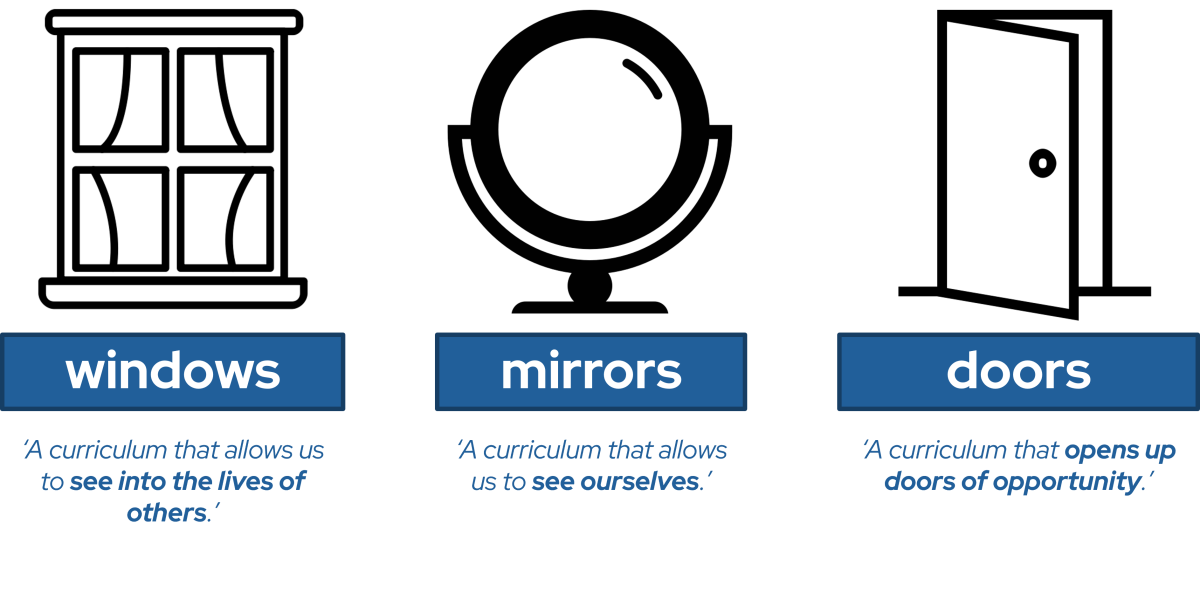
- Windows: Latin opens a window into the ancient world of language, stories, and civilisation. Pupils explore Roman daily life, mythology, and key historical influences that have shaped modern Europe. Through studying Latin words, inscriptions, and cultural practices, children gain insight into how languages develop, how societies communicate, and how ideas travel across time and place.
- Mirrors: Our curriculum reflects and values the diverse linguistic experiences of our pupils. As many children at Holy Trinity speak English as an additional language, Latin provides a shared starting point where everyone begins as a beginner. Pupils recognise links between Latin and the languages they speak at home, fostering pride in their linguistic identity and celebrating the rich tapestry of cultures in our school community.
- Doors: Latin opens doors to deeper thinking and future learning. Through analysing word roots, grammar patterns, and classical texts, pupils develop precision, reasoning, and curiosity. They engage with big questions about language, communication, and cultural influence. This empowers them to decode new vocabulary, approach other languages with confidence, and understand the lasting legacy of the ancient world on modern life.
The Enacted Latin curriculum
KS2: Pupils follow a carefully sequenced curriculum that builds knowledge and skills. Units are codified into bespoke Latin workbooks, knowledge organisers, and retrieval activities that promote deep understanding and long-term retention.
Vocabulary Building
Over 60% of English vocabulary is derived from Latin. Studying Latin helps pupils unlock the meaning of unfamiliar words across the curriculum.
Examples include:
- luna (moon) → lunar, lunatic
- videre (to see) → video, evident
- terra (earth/land) → terrain, terrestrial
These connections build confidence in reading and deepen children’s understanding of how words carry meaning.
Latin for EAL Learners
At Holy Trinity, the majority of pupils speak English as an additional language. Our Latin curriculum is intentionally inclusive and compassionate, recognising the diverse languages and cultures represented in our school.
A Level Playing Field
Because Latin is new to almost all children, everyone begins together. This creates unity and mutual support—helping pupils encourage one another and celebrate each other’s progress.
Supports English Acquisition
Latin roots help pupils understand new English vocabulary and make connections across subjects.
For example:
- portare (to carry) → transport, import, export
This supports reading comprehension, confidence and academic language.
Strengthens Grammatical Awareness
Learning noun cases, verb endings and sentence structure in Latin deepens pupils’ understanding of English grammar—especially helpful for those whose home languages follow different patterns.
Latin Curriculum Overview
At Holy Trinity CE Primary Academy, our Language: Latin Curriculum is carefully sequenced to ensure progression in knowledge.