


English: Reading & Writing
Talk for writing
Holy Trinity CE Primary Academy is a one-form entry primary school, located in inner-city Birmingham. We celebrate the diversity of our children, with the vast majority of our pupils coming from minority ethnic groups and with 36 different languages spoken at home. As a result, we believe talk is vitally important across the curriculum.
In 2025/26, we started to implement the Talk for Writing approach for the teaching of English and it has begun to have a huge impact on the progress of our pupils. Talk for Writing is an engaging teaching framework developed by Pie Corbett, supported by Julia Strong. It is particularly powerful because it is based on the principles of how children learn. It enables children to imitate the language they need for a particular topic orally, before reading and analysing it, and then writing their own innovated version prior to formulating their own independent writing.
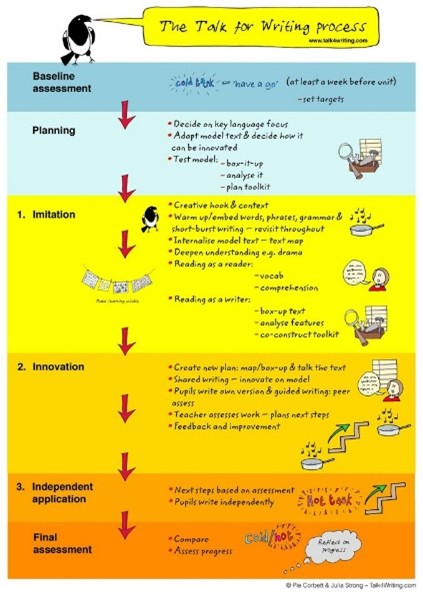
The Talk for Writing approach enables children to read and write independently for a variety of audiences and purposes within different subjects. A key feature is that children internalise the language structures needed to write through ‘talking the text’, as well as close reading. The approach moves from dependence towards independence, with the teacher using shared and guided teaching to develop the ability in children to write creatively and powerfully.
Here at Holy Trinity CE Primary Academy, we underpin our English work by establishing a core reading spine of quality fiction, poetry and non-fiction that all children experience and draw upon. Imaginative units of work are developed to create a whole-school plan that is refined over the years, is well-resourced and documented to release teachers from planning and preparation so that they can focus on adapting their teaching for children’s learning.
Curriculum Drivers: Windows, mirrors & doors
“To experience people, cultures and worlds beyond your own can deepen and enrich a reader’s understanding of the world and their place in it.”
— CLPE, Reflecting Realities (2020)
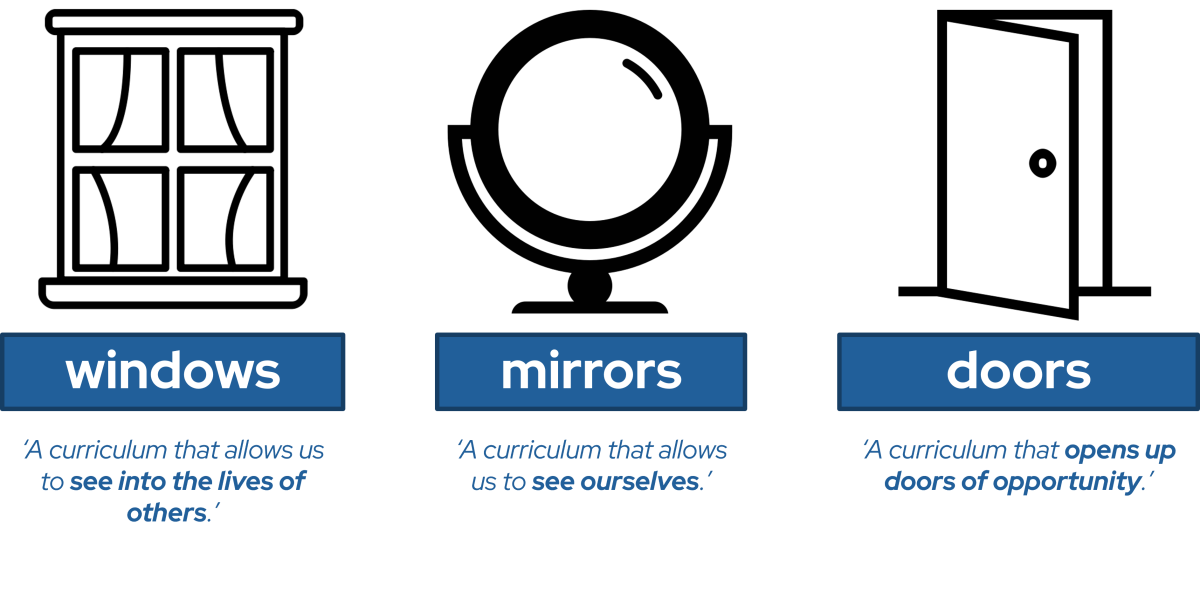
At Holy Trinity CE Primary Academy, our English curriculum is designed not only to teach children the mechanics of reading and writing, but to help them to understand themselves and the world around them. We thoughtfully select texts that serve as:
- Windows: The texts within our curriculum are ‘windows’ which allow the children to witness lives, stories and experiences that are different from their own and develop a pivotal social/emotional competence – empathy.
- Mirrors: Our rich curriculum is a ‘mirror’, which allows children to see themselves reflected in the pages of the books that we study. This includes characters, subject matter and themes that are identifiable, relatable and nuanced.
- Doors: Additionally, our texts become ‘sliding glass doors’ where the children feel transported into ‘other’ worlds and they experience powerful knowledge that takes them beyond what they currently experience
English Curriculum Map: Sequencing the literature
Fiction
At the heart of our English curriculum is a provision of high-quality fictional texts, which provide an excellent model of literary integrity, exceptional vocabulary and reflect the context of children that we teach. Our provision of fictional texts allows children to experience varying plot structures, including but not limited to; tales where the character embarks on a journey, stories where there is a beast for the protagonist to overcome or texts where the main characters lose an important object that must be found. Within these plot structures, children will be taught ‘tools’ rather than rules, of how to:
- Create carefully crafted openings and endings;
- Bring their characters alive through detailed characterisation;
- Develop vivid settings and suspense that contribute to the writing as a whole;
- Craft dialogue that moves the story forward and reveals the depth of character;
- Use description across a range of writing, including poetry and non-fiction.
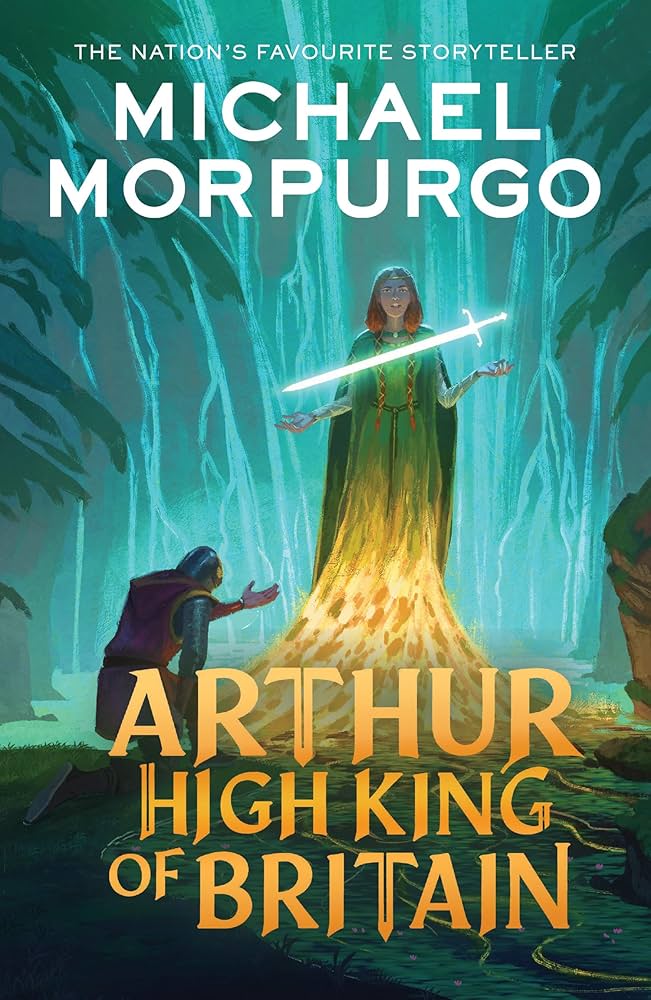
The depth and challenge in our fictional texts allows:
- Teachers to model reading challenging texts with expert prosody;
- Opportunity for children to further develop vocabulary and fluency;
- The study of the relationship between author and audience and the impact on the reader;
- Exposure to a wide and diverse range of authors, illustrators, genres and forms;
- Children to see themselves reflected in what they read and write about and to have the opportunity to investigate other lives, worlds and perspectives;
- Exposure to books that are worth revisiting, re-reading and provide the opportunity to respond in a variety of creative ways.
Poetry
In pursuit of building a rich English curriculum, we are intent on making our poetry provision one which possesses creative content, opens doors to new knowledge and is inherently challenging. This depth and challenge in our poetry texts allows:
- Teachers to model reading challenging texts with expert prosody;
- Additional opportunity to develop reading and comprehension;
- Opportunity for children to develop fluency;
- The study of the relationship between poet and audience and the impact on the reader;
- Exposure to a greater breadth and depth of vocabulary.
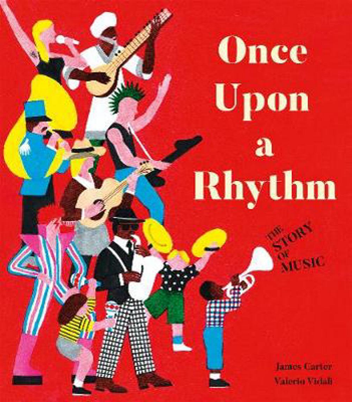
At Holy Trinity CE Primary Academy, we pride ourselves on providing a poetry curriculum, where the majority of poems stem from Bob Cox: Opening Doors anthology. At its heart, it has equity and excellence, social justice and inclusion. Some of our units include:
Year 6 studying the emotive and touching ‘Sympathy’ by Paul Laurence Dunbar, as well as Year 3 studying the classic narrative poem ‘The Pied Piper of Hamelin’ by Robert Browning. This degree of rigour and challenge is reflective of the entirety of our English curriculum and it allows children to see the world of literature in a different light.
Non-Fiction
Our English curriculum includes a high-quality provision of non-fiction texts, which are reflective of the daily texts encountered in our digital information age. Our non-fiction provision allows children to access knowledge from different disciplines, challenges stereotypes, reflect the current lived experiences of our children and is inherently challenging. This depth and challenge in our non-fiction texts allows:
- Teachers to model reading challenging texts with expert prosody;
- Greater knowledge acquisition;
- Opportunity for children to further develop fluency;
- The study of the relationship between author and audience and the impact on the reader;
- Teaching of vocabulary, non-fiction voice and presentational features;
- Teaching of the specific reading knowledge, skills and strategies that non-fiction texts require;
- Understanding of how non-fiction texts can be used as a meaningful stimulus for children’s own real world and independent writing;
- Children to draw on reader knowledge to make careful choices around voice, language and presentation in their own information writing.
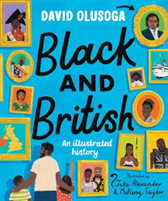
Unit Coverage Document
Example: Year 3 – Autumn Units (Fiction, Poetry and Non-Fiction) All year groups and units have an accompanying ‘Unit Coverage’ document.
Transcription: The Mechanics of Writing
At Holy Trinity CE Primary Academy, we understand that fluency in the building blocks of transcription can cognitively liberate children to focus on the composition of writing. Our enacted curriculum ensures that pupils systematically develop these essential components—enabling them to write with increasing precision and independence.
From Early Years to Year 6, children engage in daily practice of handwriting, spelling, and grammar. This consistent and intentional focus builds both fluency and automaticity. By developing these skills early, we reduce cognitive load, allowing pupils to concentrate on the richness of content, structure, and composition in their writing.
Most importantly, this fluency empowers children to apply their writing confidently not only in English lessons, but across the curriculum—enabling them to communicate ideas clearly and effectively, whatever the subject.
English: Reading
At Holy Trinity CE Primary Academy, reading is at the heart of our curriculum. We view reading as the master key that enables pupils to access every subject, develop language and knowledge, and engage fully with the world around them.
Our reading curriculum is designed so that all pupils:
- learn to read with accuracy, fluency and confidence
- read widely and often, for both pleasure and purpose
- develop the academic language required to succeed across the curriculum
Text selection is intentional and ambitious. Pupils are exposed to high-quality literature and non-fiction that:
- reflect their own identities, experiences and communities (mirrors)
- introduce new cultures, perspectives and ideas (windows)
- inspire aspiration, curiosity and future possibilities (doors)
Alongside contemporary texts, pupils encounter a rich range of British literary heritage, including classics that have stood the test of time.
So, what…?
To ensure pupils become skilled and fluent readers, we adopt a balanced, structured and cumulative approach to reading across the school.
Early Years Foundation Stage (EYFS)
- Early Reading
Systematic, high-quality phonics teaching to secure early decoding, blending and word recognition, alongside daily story time and language-rich provision.
Key Stage 1
- Guided Reading (adult-led, small group)
- Shared Reading (whole-class)
Key Stage 2
- Shared Reading (whole-class)
Whole School Entitlement
All pupils benefit from:
- Independent Reading – daily opportunities to practise and apply taught skills
- 1:1 Reading – targeted intervention informed by the Hertfordshire Reading Fluency Project
- Reading Aloud – daily story time to model fluent reading, build vocabulary and foster a love of books
Guided Reading in Key Stage 1
Guided Reading is carefully sequenced to develop decoding, fluency, prosody and comprehension.
Teaching Sequence:
- Adult-led: Decoding Focus
Explicit teaching of phonics and word-reading strategies. - Independent: Re-reading
Pupils re-read texts to build automaticity and confidence. - Adult-led: Prosody and Comprehension
Focus on expression, phrasing and meaning. - Independent: Comprehension Follow-up
Pupils respond through discussion, oral rehearsal or written tasks.
Shared Reading (Whole-Class)
Shared Reading is a central strategy across Key Stages 1 and 2, ensuring all pupils can access ambitious texts regardless of starting point.
Throughout the process, pupils:
- engage in choral and repeated reading
- read independently with accountability
- hear expert teacher modelling of fluent, expressive reading
- explore vocabulary, structure and meaning through guided discussion
Academic Reading Across the Curriculum
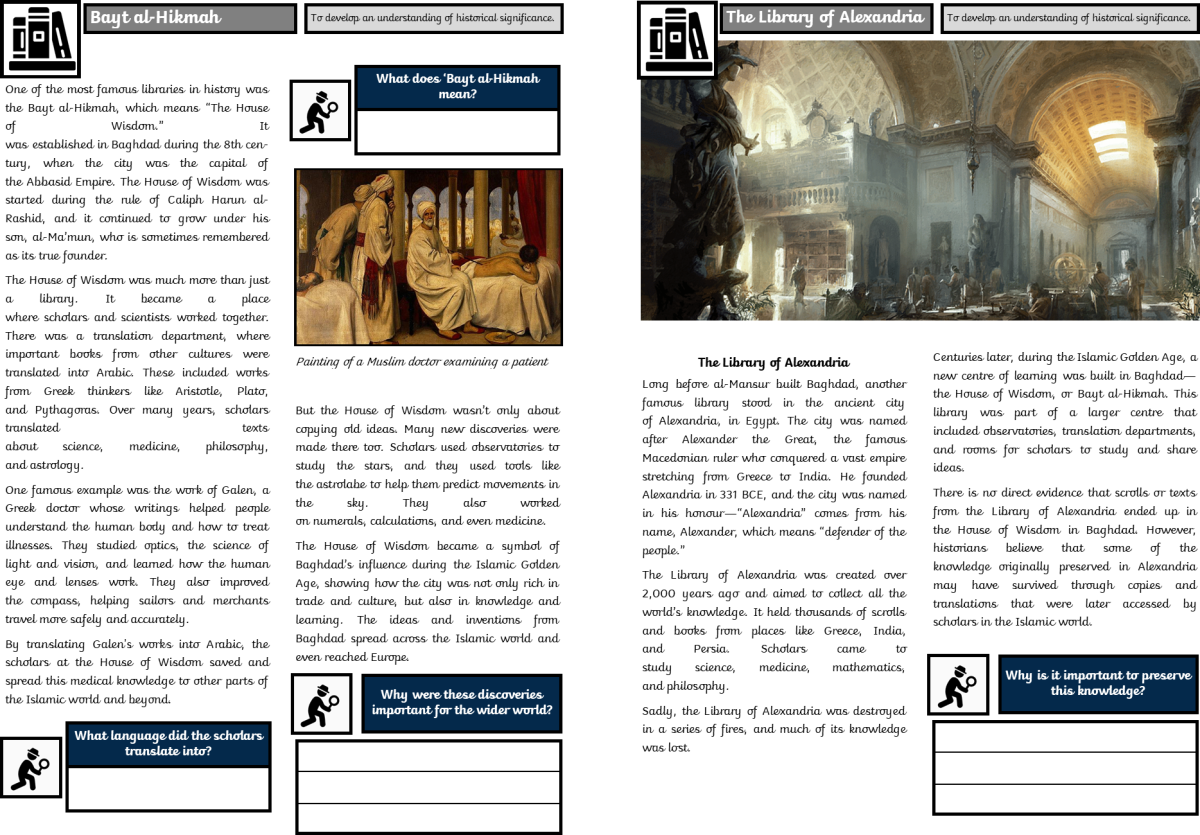
Pupils at Holy Trinity read every day across the foundation curriculum, developing the ability to read in order to learn.
Academic reading is carefully planned within subjects such as science, history, geography and religious education. Pupils engage with:
- high-quality non-fiction texts
- historical and religious sources
- diagrams, charts and subject-specific vocabulary
Teachers explicitly teach pupils how to:
- locate and retrieve key information
- summarise and synthesise ideas
- interpret academic language and tiered vocabulary
- make connections between texts and prior knowledge
This consistent exposure strengthens pupils’ disciplinary literacy, enabling them to access increasingly complex texts as they move through the curriculum.
Oracy and Reading
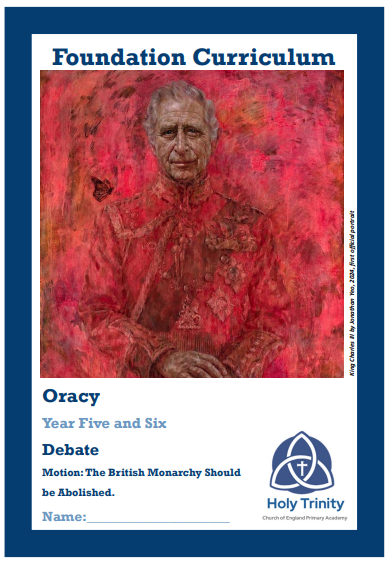
As well as bespoke oracy units, oracy is deliberately woven throughout reading instruction. Structured talk enables pupils to clarify thinking, deepen comprehension and articulate responses to texts.
Across reading lessons and the wider curriculum, pupils:
- rehearse responses orally before writing
- use sentence stems and academic language
- engage in partner, group and whole-class discussion
- justify opinions with evidence from the text
This approach ensures pupils can talk about what they read, supporting comprehension, vocabulary development and confidence in expressing ideas.