


Curriculum: Pedagogical Approach and Enactment
Enabling Characteristics
At Holy Trinity, our curriculum is brought to life through a set of carefully defined enabling characteristics. These are the conditions that sit at the heart of teaching and learning — shaping how the curriculum is experienced in every classroom, every day.
Rooted in research and aligned with our curriculum drivers of windows, mirrors and doors, these characteristics ensure that learning is not only coherent and well-sequenced, but also deeply meaningful. They reflect our belief that pupils should not simply encounter knowledge, but engage with it — thinking carefully, speaking with clarity and seeing themselves within what they learn.
Together, these enabling characteristics create classrooms where pupils develop as confident, articulate and reflective learners, able to connect knowledge, express ideas and participate fully in the world around them.
- Metacognition
“Pupils are taught to think about their thinking. Through reflection, guidance and practice, they learn to plan, monitor and refine how they learn.”
- Talk at the Centre
“Learning is shaped through talk. Structured dialogue, debate and purposeful discussion enable pupils to develop, test and strengthen their ideas.”
- Precision of Language
“Language is taught with precision. Through deliberate modelling and practice, pupils learn to speak, read and write with the clarity and confidence of scholars.”
- Belonging through the Curriculum
“Every pupil finds their place within the curriculum. Through carefully chosen content, pupils see themselves reflected and encounter the wider world.”
- Joy through Rich Content
“Joy emerges from the richness of what we teach. Through carefully chosen hinterland, the curriculum is brought to life.”
Curriculum Drivers: Windows, Mirrors and Doors
Our curriculum is underpinned by three key drivers: windows, mirrors and doors. These are rooted in the work of Professor Rudine Sims Bishop, who describes how children’s experiences of books and learning should both reflect their own lives and open up the lives of others. As outlined in her seminal work, literature — and by extension the curriculum — can act as a mirror in which pupils see themselves, a window through which they view other worlds, and a door through which they step into new possibilities and ways of thinking.
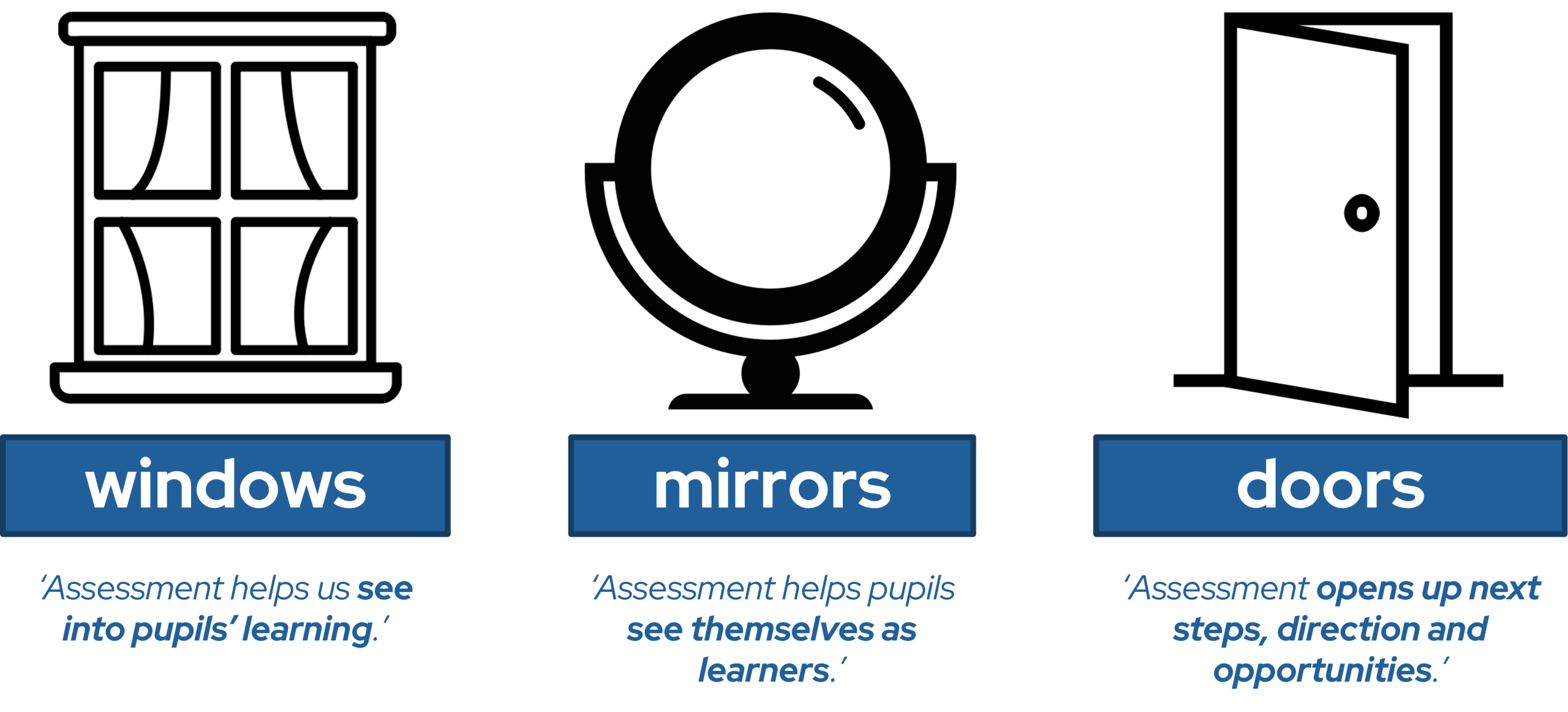
These drivers are not abstract ideas; they are deliberately woven through every aspect of school life. They shape the texts we choose, the histories we foreground, the voices we amplify and the knowledge we prioritise. They ensure that our curriculum is both academically rigorous and deeply human — enabling pupils to develop a strong sense of identity, alongside a rich understanding of the diverse world around them.
Importantly, these drivers extend beyond curriculum design into teaching, assessment and collective worship. In classrooms, they guide how knowledge is framed and discussed, ensuring pupils encounter both familiar and unfamiliar perspectives. In assessment, they influence the way pupils are invited to articulate, connect and apply their understanding. In worship, they underpin moments of reflection, allowing pupils to see themselves, consider others and respond thoughtfully to the wider world.
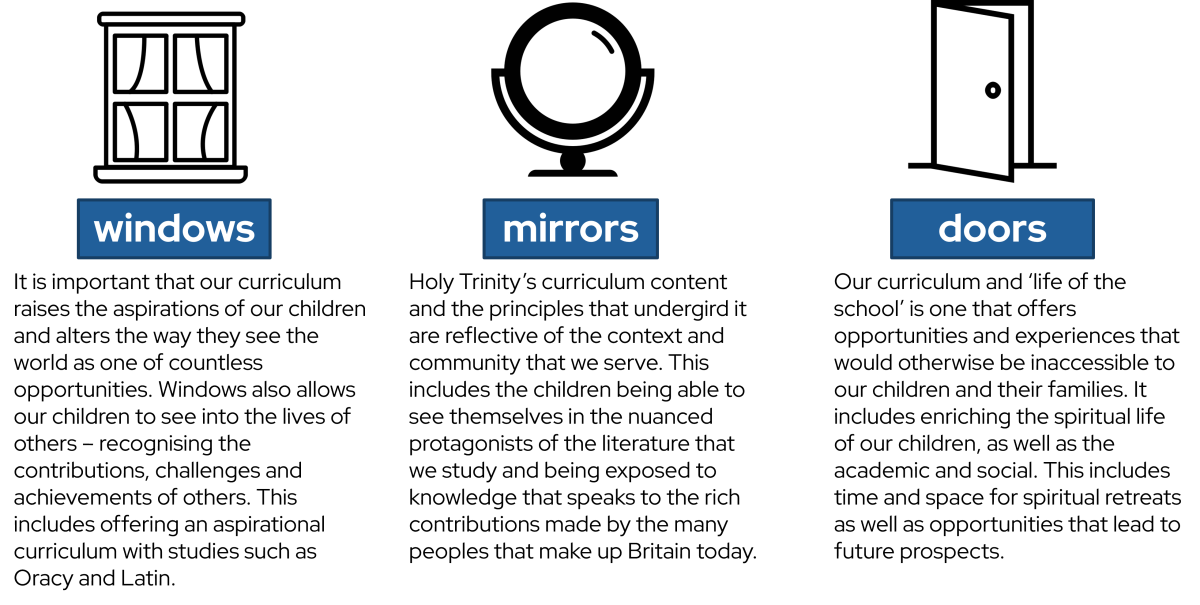
Through windows, mirrors and doors, our curriculum does more than inform — it forms: shaping pupils who are knowledgeable, reflective and ready to participate meaningfully in society.
Five-Part Lesson Structure
At Holy Trinity, lessons are carefully structured to ensure that pupils build knowledge securely over time, with clarity, precision and purpose. Our five-part model is informed by the work of the Education Endowment Foundation, particularly its Metacognition and Self-Regulated Learning guidance report.
This guidance sets out a seven-step model — from activating prior knowledge, through explicit instruction and modelling, to guided and independent practice and structured reflection. Our lesson structure draws these principles together into a coherent, classroom-ready approach, ensuring that teaching is both deliberate and responsive, and that pupils are supported to become increasingly independent in their thinking.
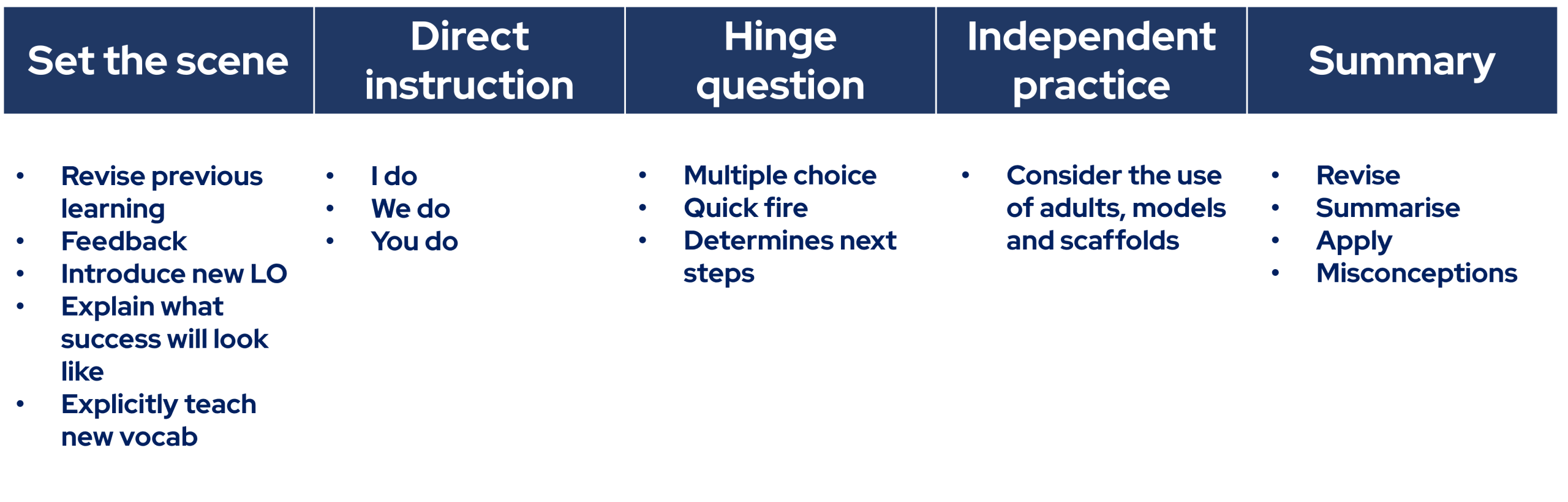
Importantly, this structure is not a rigid template. Lessons are not forced into a formula or sequence for the sake of compliance. Rather, it provides a shared, flexible framework that teachers draw upon where appropriate — enabling consistency in approach while allowing professional judgement to shape each lesson in response to the subject, the content and the pupils in front of them.
Curriculum Thinking
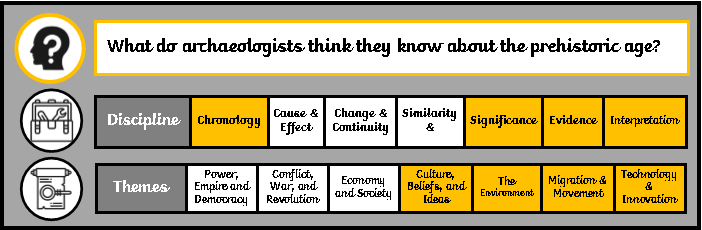
Our curriculum is rooted in a clear understanding of what it means to be a scholar within each subject. Drawing on wider curriculum thinking, including the work of Christine Counsell, we deliberately shape and sequence three interrelated forms of knowledge:
- Substantive knowledge – the core content of the subject: established facts, concepts and narratives that pupils learn and revisit over time. This is the “stuff” of the curriculum — the material that gives pupils something to think with.
- Disciplinary knowledge – the ways of thinking, reasoning and enquiring that are particular to each subject. This includes how knowledge is constructed, debated and refined — for example, how historians interpret evidence or how theologians and philosophers engage with belief.
- Hinterland knowledge – the broader contextual, cultural and incidental knowledge that sits around the core curriculum. Counsell describes this as the richness that gives meaning, texture and resonance to what is taught — helping pupils to connect ideas, deepen understanding and situate knowledge within the wider world.
We are intentional not only about what is included within our curriculum, but also about what is left out. This disciplined approach ensures that learning remains coherent, cumulative and intellectually rigorous.
Curriculum Enactment: Booklets and Consistent Lesson Design
Our curriculum is enacted through bespoke pupil booklets, which sit at the heart of teaching and learning across the school. These are carefully constructed to align with our Five-Part Lesson Structure, ensuring that curriculum thinking is translated into consistent, high-quality classroom practice.
The use of booklets provides a shared structure for both learning and assessment, enabling pupils to engage deeply with content while supporting teachers to deliver the curriculum with clarity and precision. They also function as a key mechanism for professional consistency, embedding strong pedagogical practice across all classrooms.
Bespoke custom-designed booklets are used in:
- Religious Education and Worldviews
- History
- Geography
- Science
- Latin
- Oracy and Debating
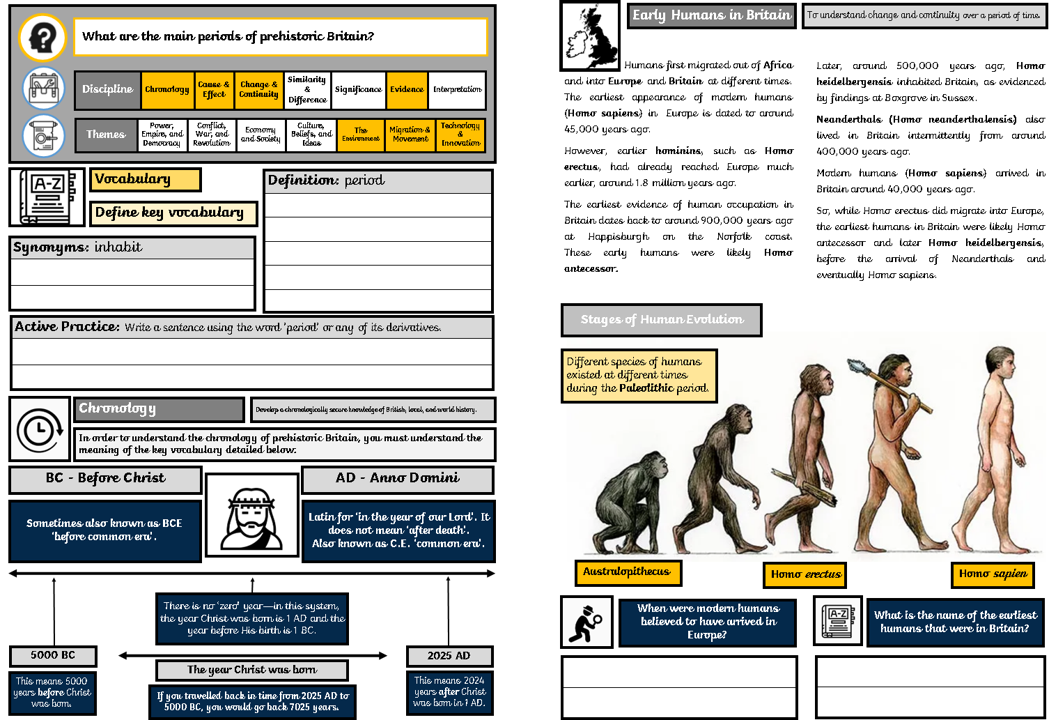
Each unit is supported by a carefully sequenced booklet, typically including:
- Knowledge Organiser
A distilled summary of essential knowledge, forming the foundation for teaching, retrieval and assessment. - Pre- and Post-Unit Assessments
Parallel assessments at the beginning and end of each unit, enabling teachers to identify starting points, evaluate progress and adapt teaching. - KWL Frameworks
Structured opportunities for pupils to reflect on what they know, want to know and have learned, supporting metacognitive development. - Vocabulary and Glossary
Carefully selected subject-specific vocabulary, explicitly taught and revisited, enabling pupils to communicate with increasing precision. - Graphic Organisers
Visual representations of knowledge that support understanding, organisation and long-term retention. - Retrieval and Review Tasks
Each lesson begins with retrieval practice and concludes with a short reflective or diagnostic task, strengthening memory and identifying misconceptions. - Extended Essays
Units culminate in extended responses where pupils apply their knowledge in a sustained and structured way. These assess pupils’ understanding of the curriculum content, while developing their ability to reason, explain and construct arguments.
Curriculum Experience
Through this approach, pupils encounter a curriculum that is coherent, connected and intellectually engaging. Knowledge is revisited and strengthened over time, language is used with increasing precision, and pupils learn to think within the disciplines they study.
Our use of booklets ensures that learning is not fragmented or driven by disconnected activities. Instead, pupils experience a carefully sequenced journey through each subject — one that builds understanding cumulatively and enables them to engage thoughtfully with the world around them.