


Collective Worship
The Heartbeat of Our School
At Holy Trinity, collective worship is more than a statutory requirement — it is the spiritual heartbeat of our school community. Shaped by our Christian vision “to reflect the heart of God by showing compassion and caring for all”, worship creates a daily opportunity to pause, reflect, and grow together.
Rooted in Handsworth’s remarkable diversity and hope, collective worship gathers children and adults to explore life’s big questions, celebrate what we value, and deepen our sense of belonging and purpose.
drivers which underpin our worship
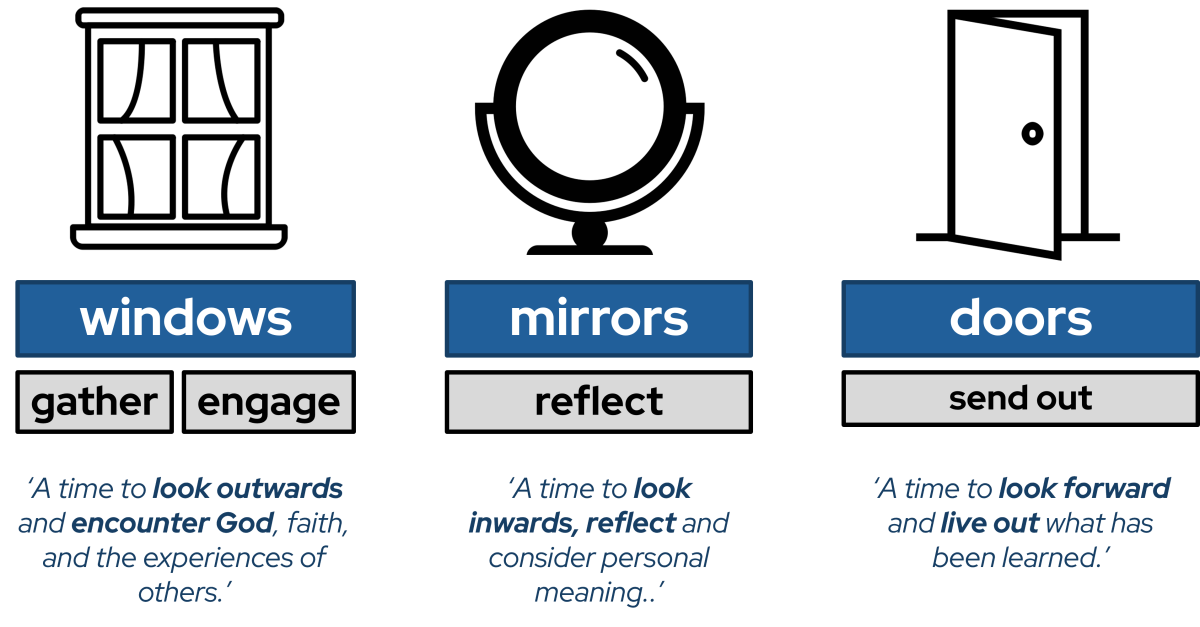
At Holy Trinity, collective worship is intentionally structured to reflect our curriculum drivers of Windows, Mirrors, and Doors. This ensures worship is not only spiritually meaningful, but also connected to identity, belonging, and aspiration.
Our worship follows four movements:
Gather → Engage → Reflect → Send Out
Each stage connects to one of our drivers.
Windows — Gather & Engage
A time to look outwards and encounter God, faith, and the experiences of others.
Gather
This is how we come together as a worshipping community.
- Entry into the hall is calm and intentional, creating a sense of sacred space.
- A teacher or a member of the Faith Council lead a liturgical welcome (e.g., Peace be with you).
- Music and visual focus help prepare hearts and minds.
- School vision and values are revisited.
- Children recognise this moment as different from ordinary school time.
Windows Connection:
Children encounter the Christian story and the wider world beyond themselves.
Engage
This is where children are drawn into the theme and encounter meaning.
- Use of scripture, storytelling, music, or drama.
- Carefully chosen themes linked to Jesus’ teaching and example.
- Explicit explanation of the key message.
- Connections made to real life, community, or global issues.
Windows Connection:
Children explore beliefs, values, and experiences beyond their own.
Mirrors — Reflect
A time to look inwards and consider personal meaning.
Reflect
This stage provides stillness and opportunity for personal response.
- Silence, gentle music, or guided reflection.
- Questions to ponder rather than instructions to follow.
- Children consider feelings, choices, and personal connections.
- Space for spiritual development and self-awareness.
Mirrors Connection:
Children see themselves — their identity, emotions, and experiences — within the message.
Doors — Send Out
A time to look forward and live out what has been learned.
Send Out
This is the commissioning moment of worship.
- A member of the Faith Council may light a candle to symbolise faith going into the world.
- Prayer linked directly to the worship theme.
- Encouragement to act with compassion, courage, or kindness.
- A clear takeaway message or challenge.
Prayer is central — not only the Lord’s Prayer but additional pupil-led prayer.
Doors Connection:
Worship opens opportunities for children to make a difference in their lives and community.
Our Vision and Values in Worship
Our worship life brings our four core values to life:
- Community – nurturing belonging and togetherness (Luke 6:31)
- Aspiration – encouraging hopeful ambition and striving for our best (Philippians 3:13–14)
- Respect – honouring each person’s dignity as a unique child of God (1 John 3:1)
- Excellence – giving our best with joy and integrity (Colossians 3:23)
We are also guided by our school’s central tenet cura personalis — care for the whole person — so worship supports spiritual, social, and emotional development alongside learning.
Theological Foundations
Holy Trinity’s vision is underpinned by two Gospel narratives that shape our worship themes, language, and practice:
- Mark 6:34 — Jesus sees the crowd “like sheep without a shepherd” and responds with compassion, teaching, guidance, and practical care.
- Luke 7:11–17 — Jesus meets a grieving widow and restores hope through tender mercy.
These accounts reveal the heart of God: a love that notices, a mercy that draws near, and a care that restores — and this is the pattern we seek to live out as a school family.
Inclusive, Invitational, and Inspiring
In line with Church of England guidance, collective worship at Holy Trinity is:
- Inclusive: we welcome everyone, regardless of faith background, using language and themes that are accessible and meaningful for all.
- Invitational: children and adults are invited (not compelled) to engage in prayer and reflection in ways that feel right for them.
- Inspiring: worship aims to awaken curiosity, develop character, and encourage action rooted in compassion and justice.
The Church of England describes collective worship as the “unique heartbeat of a Church school.”
How We Worship
Worship at Holy Trinity is varied, purposeful, and planned to reflect Anglican tradition while meeting the needs of our pupils. It may include:
- Bible stories and the teachings of Jesus
- Prayer and stillness (including the Lord’s Prayer and pupil-led prayers)
- Music, singing, and creative responses (drama, art, reflection)
- Worship connected to our values and to lived experience in Handsworth
- Key Christian festivals and seasons (e.g., Harvest, Advent/Christmas, Lent/Easter, Pentecost)
Why This Matters at Holy Trinity
This structure ensures collective worship:
- Reflects our Christian vision of compassion and care for all
- Supports spiritual development in an inclusive way
- Connects directly to curriculum and identity
- Encourages courageous advocacy and action
- Strengthens belonging and community
It moves worship from something children attend to something they experience and live.
Our Weekly Pattern
A typical weekly structure may include:
- Monday – introducing the weekly theme through scripture, story, and song
- Midweek – deepening the theme through reflection, poetry, testimony, or pupil voice
- One day weekly – worship supported by our clergy – Rev. Alison
- Friday – celebration worship: recognising achievement, effort, and “values in action”
(Schools adapt this pattern across the year to respond to the liturgical calendar, community events, and pupil needs.)
Pupil Leadership and Participation
Children are central to worship at Holy Trinity. Pupils are encouraged to:
- write and lead prayers
- read scripture and reflections
- help plan themes and create worship resources
- evaluate worship so it continually improves
This develops confidence, responsibility, and spiritual agency — helping children see themselves as contributors, not just audience members.
Partnership with Church and Community
As a Church of England school, Holy Trinity values close links with the parish and wider community. These relationships enrich our worship life through shared services and special moments across the year (for example: Harvest, Christmas, Easter, Remembrance, and Leavers’ services), strengthening our sense of belonging to something bigger than ourselves.
What Collective Worship Gives Our Children
Through worship, we aim to help every child:
- encounter a loving God who notices and cares
- develop character, compassion, and moral courage
- experience awe, wonder, stillness, and reflection
- grow in dignity, respect, and community-minded living
- flourish as whole people — academically, socially, emotionally, and spiritually
Right to Withdraw
Collective worship is part of the daily life of a Church school. Families have the legal right to request withdrawal from collective worship, and we always invite parents/carers to speak with the Headteacher if they would like to discuss this.